Dublin, Ireland Travel Guide: What to See in a Weekend
This Dublin Ireland travel guide comes out of a trip we didn’t so much plan as back into. An Aer Lingus deal made a weekend add-on too good to pass up, so we packed everything we could into two days. Aer Lingus is Ireland’s national airline, and it’s worth knowing that name if you’re hunting for good fares into Dublin. It turned out to be plenty of time to see the city’s highlights, form some strong opinions, and come home with a line we’ve repeated to everyone who asks about the trip.
Why This Dublin Ireland Travel Guide Works for a Weekend
Dublin is compact. Everything on this list was walkable from a central base, which means two days is enough to hit the major sights without feeling rushed the entire time. It’s also an easy add-on to a longer European trip, especially with Aer Lingus connections making a Dublin stopover simple to tack onto other plans.
With only two days, we didn’t want to waste any of it figuring things out on the fly, so we hired a National White Badge tour guide. If you’re familiar with the Blue Badge guides in the UK, this is Ireland’s equivalent, a guide who has gone through official training and certification to lead visitors around the country’s sites. It made a real difference in how much we were able to see and understand in a short amount of time, and it’s something we’d recommend to anyone trying to make the most of a tight Dublin schedule.
EPIC The Irish Emigration Museum
EPIC is a highly interactive museum, and it earns that description. It tells the story of the great Irish emigration of the 1800s, but it doesn’t stop there. It carries the story into more recent history too, including the people who fled the Troubles in Northern Ireland. We went in expecting a history lesson and came out with a much fuller picture of what leaving Ireland has meant across generations. The museum sits in the vaults of the old CHQ building on Custom House Quay, itself a 200 year old customs warehouse, which adds another layer of history underfoot as you walk through. EPIC official site has current hours and tickets if you want to plan ahead.
The Famine Statues
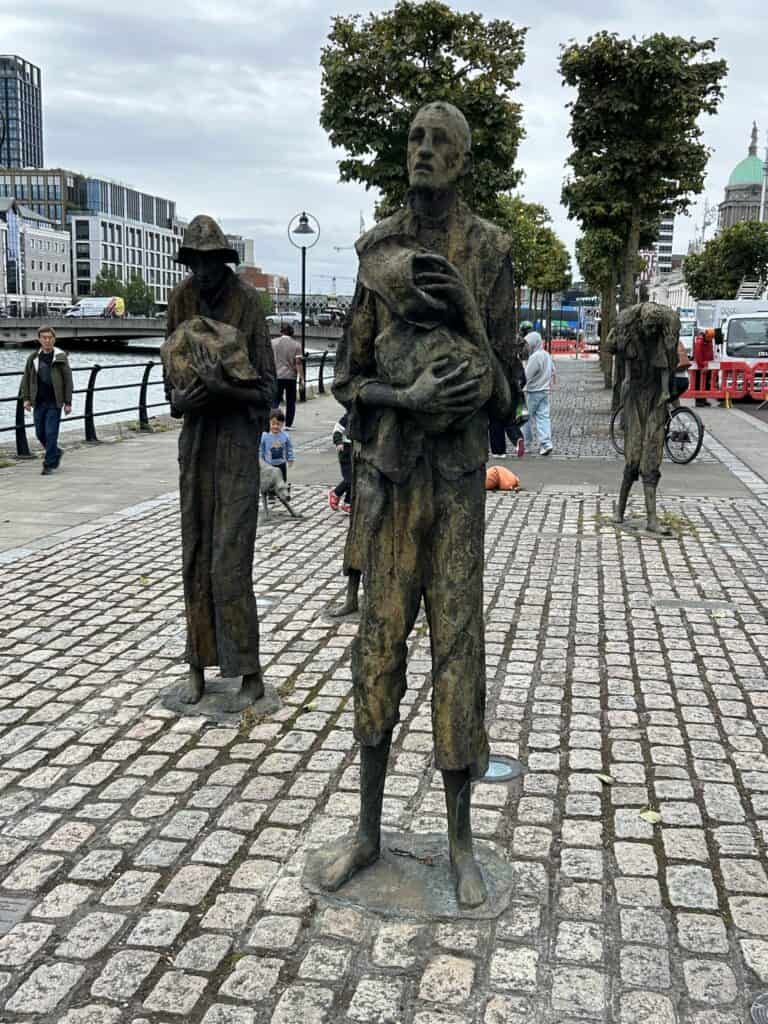
A short walk from EPIC, the Famine Statues stand on Custom House Quay, the same stretch of dock where the ship Perseverance set sail in 1846 carrying some of the first Famine emigrants out of Ireland. The bronze figures, created by sculptor Rowan Gillespie and presented to the city in 1997, depict men, women, and children walking toward that departure point, thin and worn down by hunger. Seeing that up close is sobering in a way photos don’t prepare you for.
What stayed with us longest was a smaller detail among the group: a dog rendered nearly bare to the bone, walking alongside the family that could no longer feed it either. It’s a reminder that the Famine didn’t spare anything in its path, people or otherwise, and it’s one of the stops in this Dublin Ireland travel guide that’s stayed with us the longest. You can read more about the memorial and the sculptor’s work at Rowan Gillespie’s site.
St. Audoen Church and the Dublin City Wall
St. Audoen wasn’t something we’d read much about ahead of time, which made it one of our favorite discoveries. It’s Dublin’s oldest surviving medieval parish church still in use, dating to around 1190, and it sits right against a stretch of the old Dublin City Wall, tucked into the Liberties neighborhood away from the main tourist path.
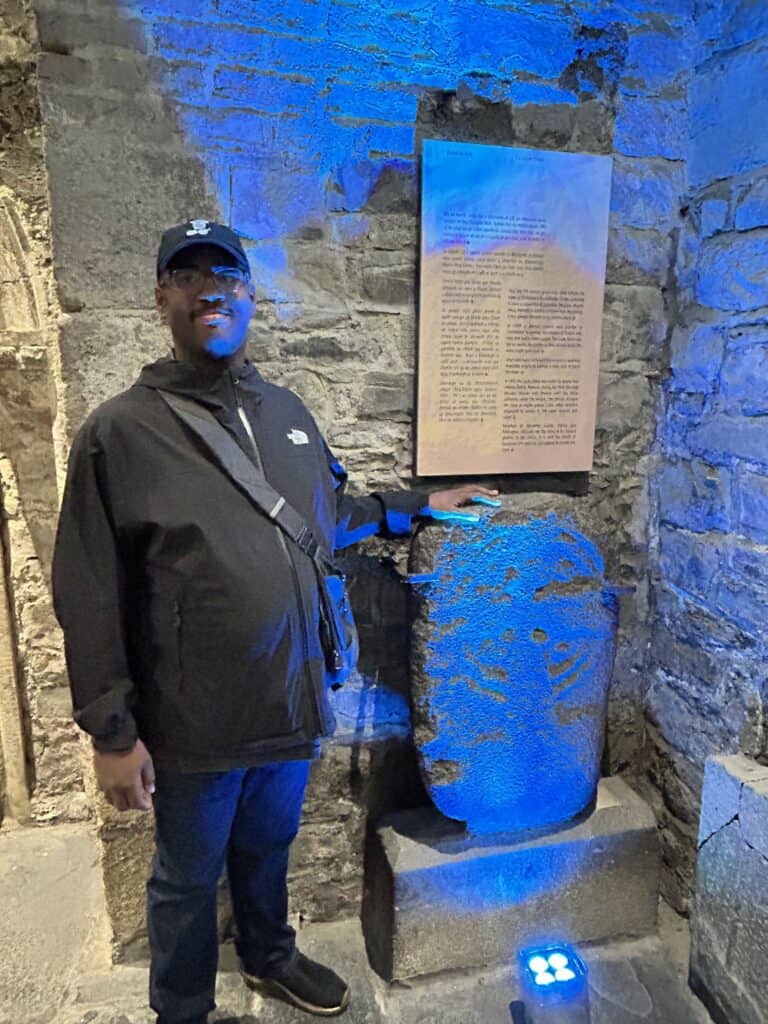
The real draw for us was the story of the Lucky Stone, a 9th century grave marker kept in the church porch. Legend holds that merchants and traders once rubbed the stone for good fortune, and that it has a habit of returning to Dublin no matter how far it’s carried off. One version of the story claims it was stolen in the 1820s and grew heavier the farther it traveled from the city, until it was eventually returned. True or not, it’s the kind of local legend that makes an overlooked church worth the detour. More on the Lucky Stone’s history here.
Dublin Castle
We saw Dublin Castle from the outside but didn’t go in, and it still earns a spot in this Dublin Ireland travel guide. If you’re deciding how to spend limited time, know that the exterior and grounds are worth a stop even if you skip the interior tour.
Temple Bar and the Temple Bar District
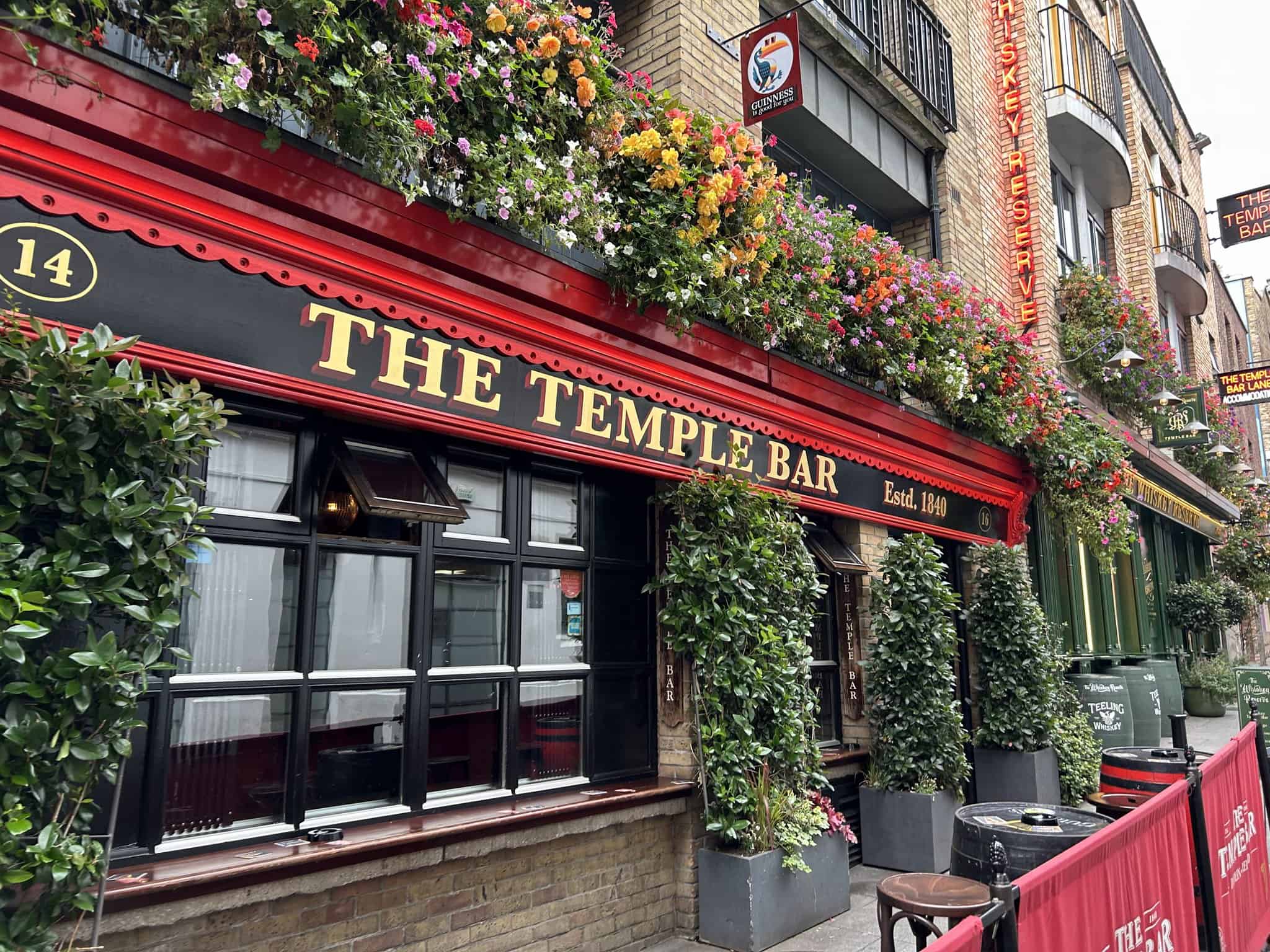
Temple Bar is both a specific pub and the district around it, and it’s worth separating the two. The district has plenty going on. The bar itself is a different story: overpriced beer and a scene built for tourists looking for a big night out, which isn’t our idea of fun. However this bar and the surrounding area is a part of every Dublin Ireland travel guide you see, so we’re including it in ours too.
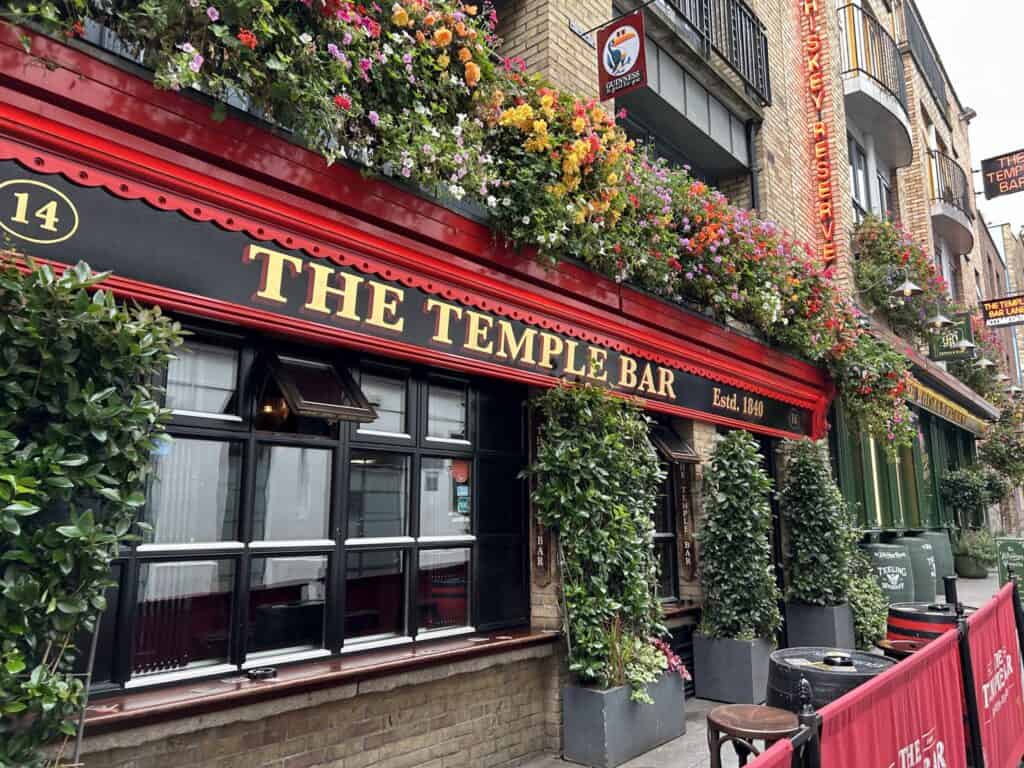
Our advice: go to Temple Bar, the actual bar, so you can say you’ve been. Then leave and find a better spot for the rest of your night. There are far better places around Dublin to get a Guinness without the markup. While you’re in the district, skip the drinking scene and check out the dessert and ice cream options instead, our Dublin desserts guide has our full list of favorites.
Ha’penny Bridge and the Molly Malone Statue
The Ha’penny Bridge was originally a mode of transportation across the river, and today it’s mostly a good photo op. It’s old, it’s iconic, and that’s about the extent of it.
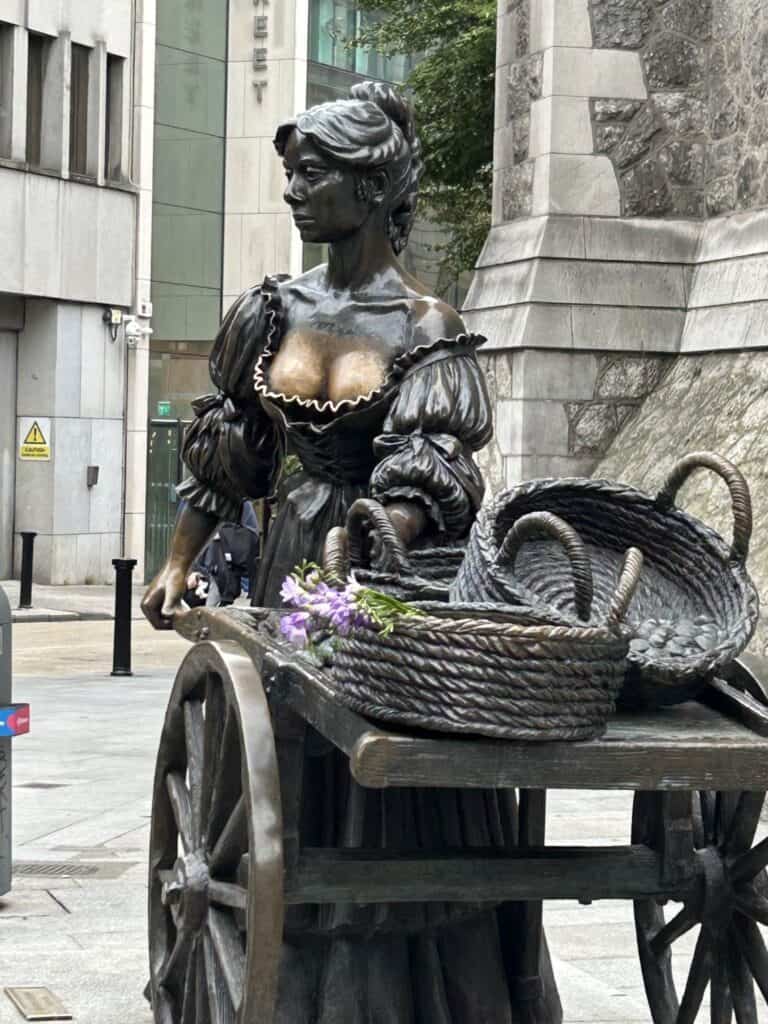
The Molly Malone Statue is the same kind of stop, but it comes with more of a story than most people realize. Molly is the fishmonger from the song “Cockles and Mussels,” Dublin’s unofficial anthem, and there’s no solid evidence she was ever a real person. That hasn’t stopped Dubliners from adopting her anyway, nicknaming the statue “the tart with the cart” and giving her an official day on the city calendar every June 13.
The statue originally stood on Grafton Street when it was unveiled in 1988 and was moved to its current spot on Suffolk Street in 2014. Watch where tourists rub her chest for luck, the same way visitors rub the nose of the Greyfriars Bobby statue in Edinburgh. It’s worn to a shine from the tradition.
Trinity College, the Old Library, and the Book of Kells
This one comes down to how important it is to you personally, and it’s the kind of call this Dublin Ireland travel guide can’t make for you. The lines can be long, and there’s a real cost involved. When we visited, the Old Library was under renovation, so we missed the famous Long Room view entirely. As for the Book of Kells, you only see one page of it. For us, that wasn’t worth the wait. You may feel differently, and that’s a call only you can make. If you do want to go, book ahead through the official Trinity College site, since walk-up tickets are unreliable in peak season.
National Museum of Ireland
We spent our time in the Archaeology branch on Kildare Street, and there’s plenty to see. It holds some of Ireland’s most significant finds, including Bronze Age gold work and bog bodies preserved from thousands of years ago. Like most of the country’s national museums, admission is free, which makes it an easy add to a day that’s already packed with paid attractions elsewhere in the city. Depending on your interest level, you could spend a few minutes here or the better part of a day, which is why we’re including it in this Dublin Ireland travel guide even though our own visit was brief.
Guinness Storehouse and Jameson Distillery
We didn’t visit either one, so we can’t speak to the experience firsthand. Both are available and popular, and if you’ve done the Johnnie Walker Experience in Edinburgh, we’re told Guinness offers something similar. Worth knowing they’re there even if they weren’t a priority for us, since most visitors following a Dublin Ireland travel guide will want at least one of them on the list. Details and tickets are on the Guinness Storehouse site and the Jameson Distillery Bow St. site.
Grafton Street and O’Connell Street
Grafton Street is a great place to browse shops and watch people, even if you’re not buying anything. It’s also one of Dublin’s best spots for street performers, and we got lucky here ourselves, catching a group of excellent buskers playing while we walked the street.
O’Connell Street carries a different kind of weight. It’s Dublin’s main thoroughfare, running north from the River Liffey, and it was the center of the 1916 Easter Rising and the fighting of the Irish Revolution in the 1920s. You can still see bullet holes in some of the buildings more than a hundred years later, including around the General Post Office, which served as rebel headquarters during the Rising.
More recently, O’Connell Street picked up a strange new landmark. Near the GPO and the Spire sits The Portal, a large circular screen with a 24/7 livestream connecting Dublin to New York City in real time, with other cities added since. Locals and visitors on both ends wave, hold up signs, and generally treat it like a giant video call between two cities. It’s an odd and genuinely fun thing to stumble across if you’re walking the street.
Where We Ate
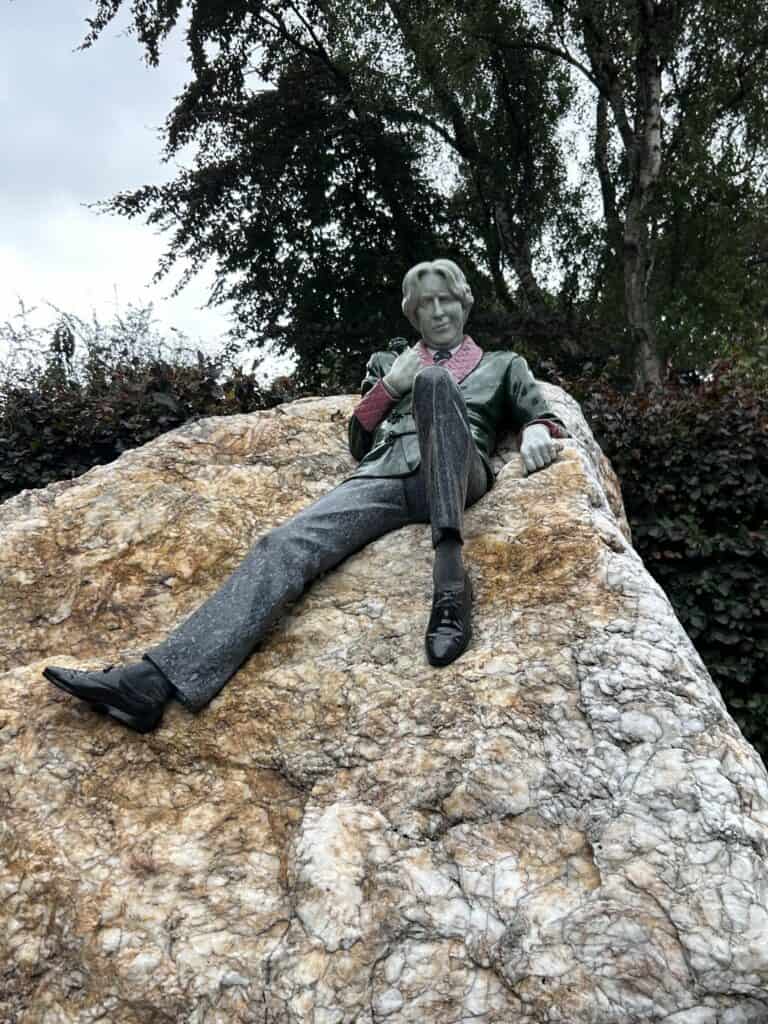
Kennedy’s Pub, near the National Museum, was a solid meal and sits close to a striking Oscar Wilde statue worth a look, a reclining figure on a boulder in Merrion Square that’s become a Dublin photo stop in its own right. Not far from EPIC, we also ate and drank at Harbormaster Bar & Restaurant, a good option if you’re spending the afternoon in the Docklands area. In the Temple Bar area, we ate at The Old Mill. It leans into the tourist-trap reputation of the neighborhood, but we liked it anyway. The fish and chips were excellent, and the rustic, old-world atmosphere won us over.
Planning Your Own Dublin Weekend
Go to Temple Bar so you can say you’ve been, then find somewhere better for the rest of your night. And if you have the time, consider a day trip north to Belfast. It pairs naturally with a Dublin weekend and adds an entirely different layer to the trip. This Dublin Ireland travel guide points you toward our Belfast Black Cab Tour, our Titanic Belfast review, and Monasterboice, a striking early Christian monastic site just across the border, as a great way to round out that side trip.
This Dublin Ireland travel guide gave us exactly what a weekend add-on should: history, a few good meals, and a story worth retelling. If we go back, though, it probably won’t be for more of Dublin. It’ll be to see the west coast of Ireland, which we didn’t get anywhere close to this trip.
As for how the weekend summed up for us, we’ve told the story the same way every time since: Dublin is nice, but if we wanted to get drunk with a bunch of Americans, we could have stayed home.