Step Into History at the Truman Presidential Library and Museum
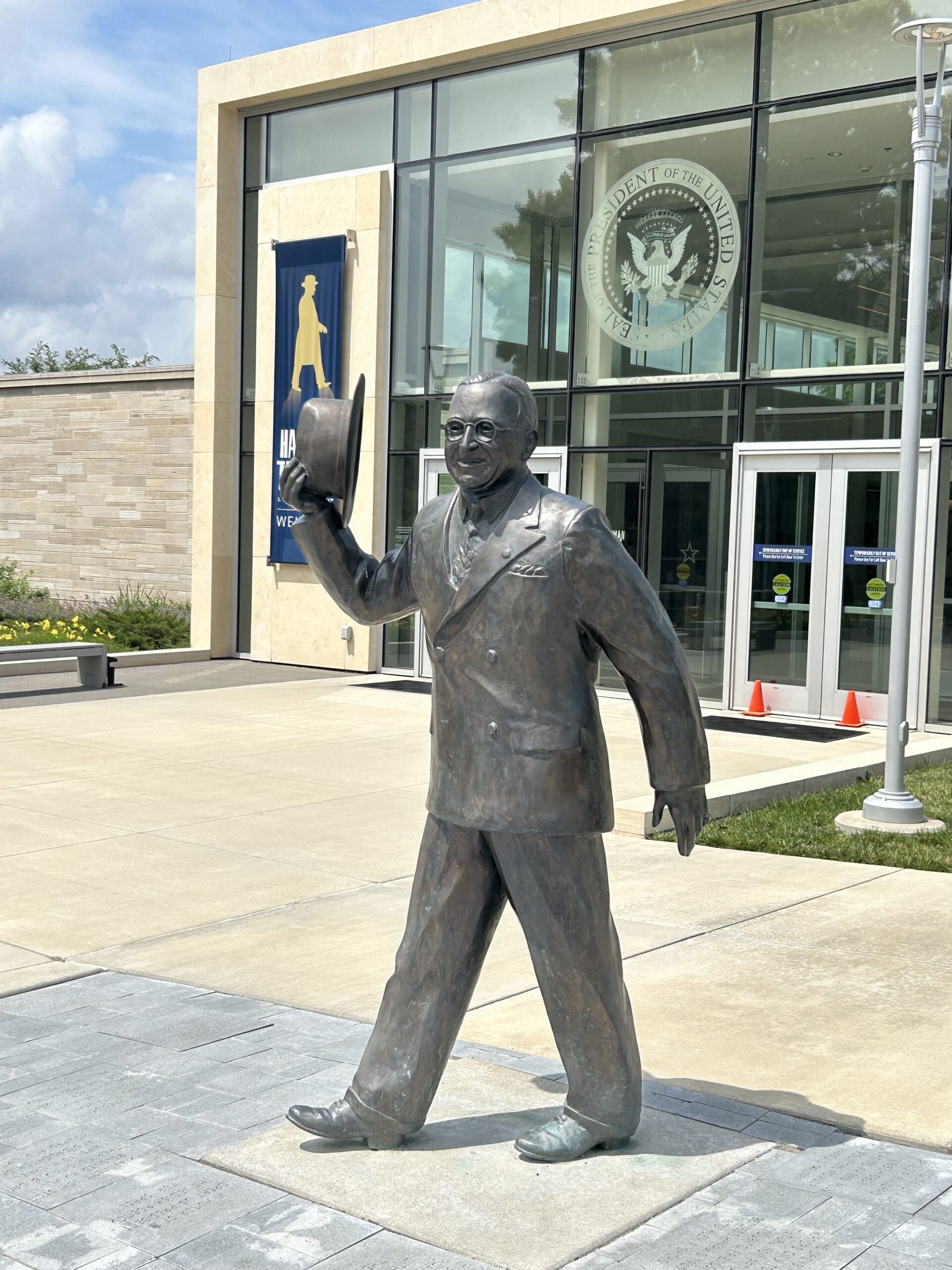
Museums have a unique ability to bring history to life—and presidential libraries do this especially well. That’s certainly true of the Harry S. Truman Presidential Library and Museum in Independence, Missouri.
A Humble Beginning
Located in Independence, a suburb of Kansas City, the Truman Presidential Library—along with the nearby Truman family home—tells the story of an unassuming man who became president during one of the most pivotal moments in world history: the final stages of World War II, following the death of Franklin D. Roosevelt. The Truman Presidential Library exhibits cover his entire life, including his time serving in World War I and his rise in politics.
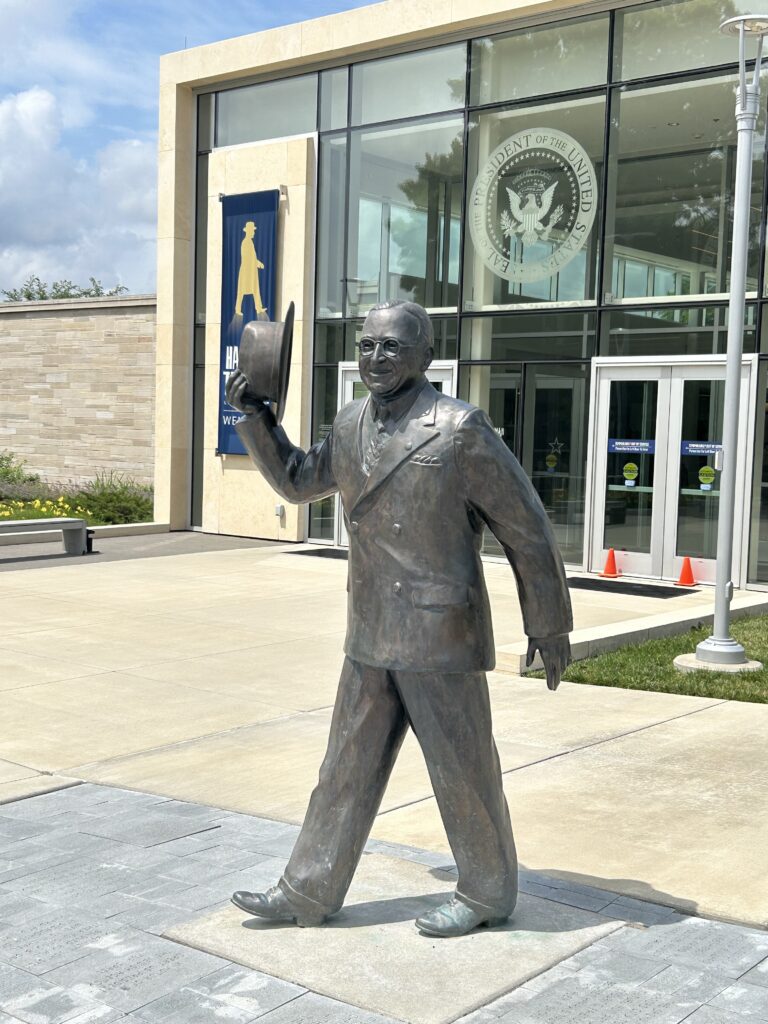
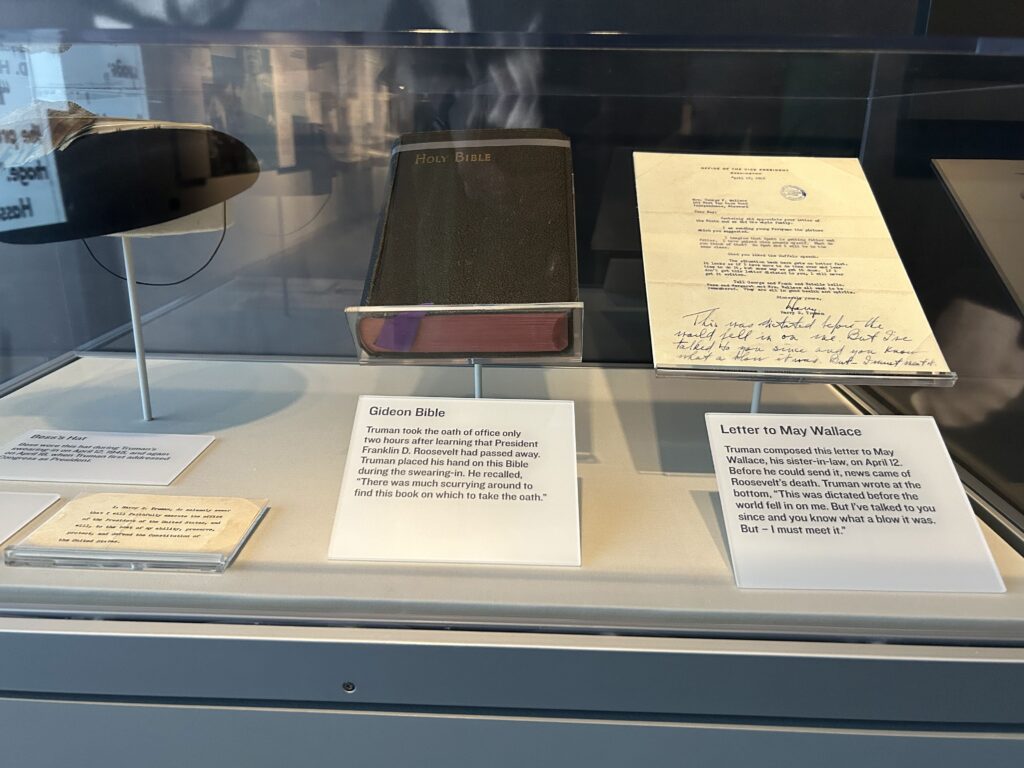
Truman grew up on a small farm nearby before his family moved to Independence when he was six. The museum’s exhibits trace his unlikely rise in politics, culminating in his sudden elevation to the presidency. As vice president, Truman was largely kept out of major decisions and discussions. That changed abruptly on April 12, 1945, when Roosevelt died and Truman was sworn in as president.
The Weight of the Presidency
There is so much more to the Truman story, but the two biggest moments in his political career stand out; he was the first (and only) president to give the orders to drop an atomic bomb as an act of war, and he narrowly defeated Thomas E. Dewey in the 1948 presidential election but not before the Chicago Tribune printed and distributed the now famous front page with the headline “Dewey Defeats Truman.”
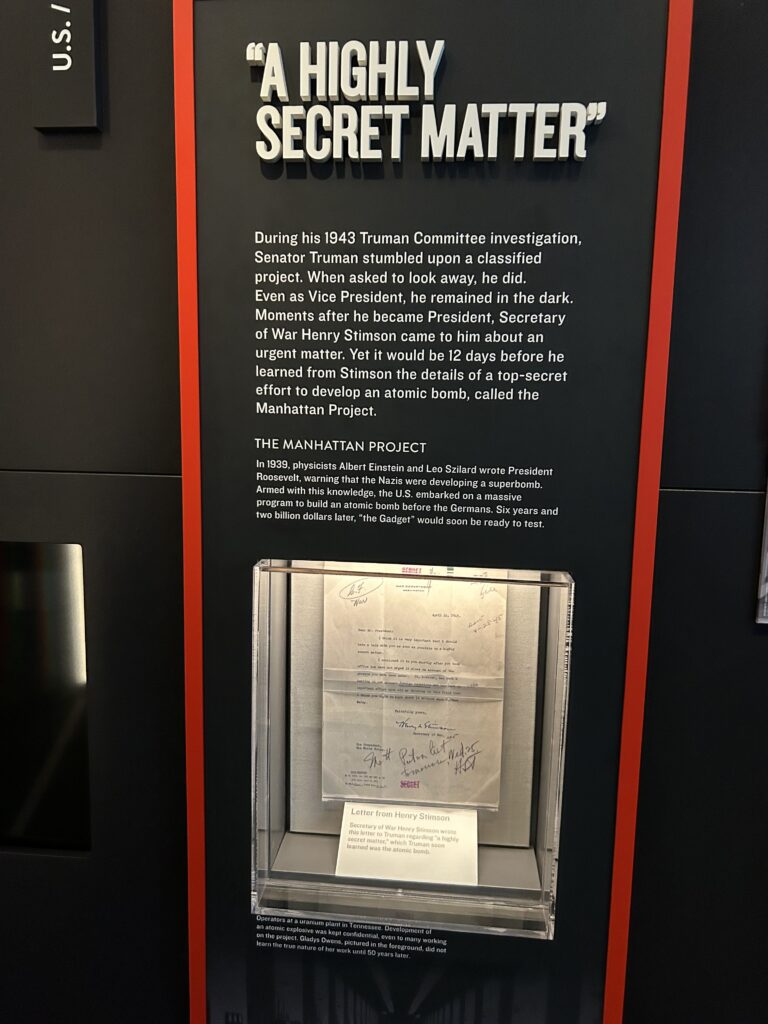
Visiting the Truman Presidential Library offers a compelling look at Truman’s role in the Manhattan Project, the secretive effort to develop the atomic bomb. As a senator in 1943, Truman questioned the project’s funding but was told to stop asking questions—and he did. Even after becoming vice president, he remained in the dark. It wasn’t until nearly two weeks into his presidency that Secretary of War Henry Stimson briefed him on the program.
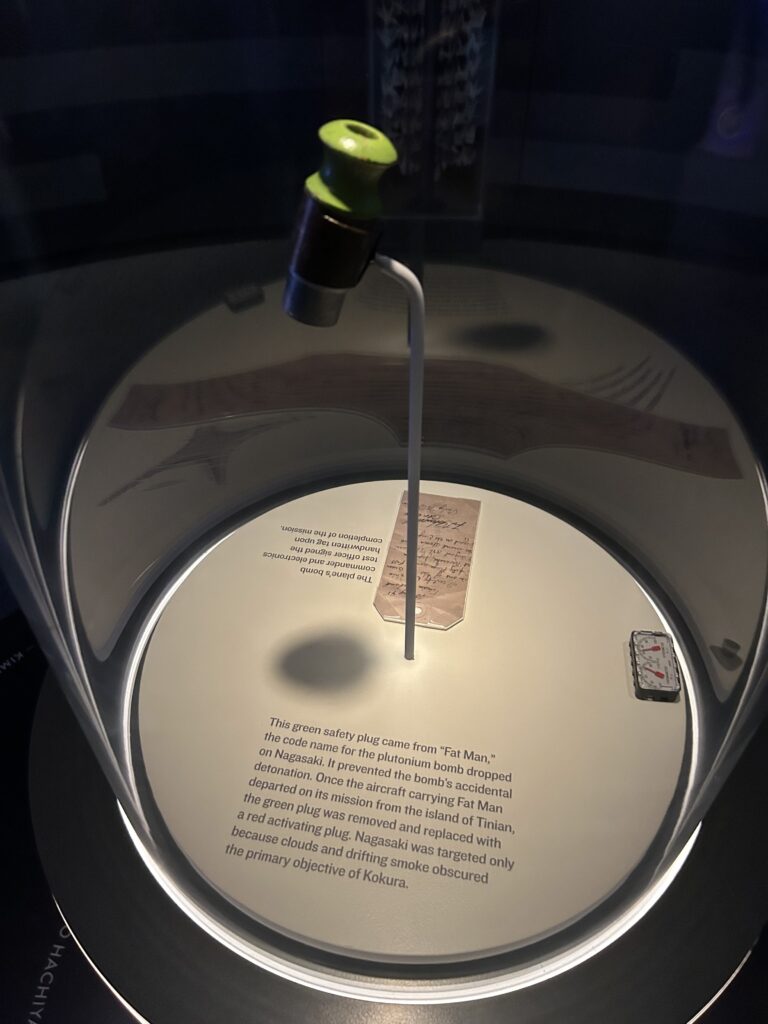
Less than four months later, Truman made the decision to drop atomic bombs on Hiroshima and Nagasaki. The museum does an excellent job of presenting the context and reasoning behind these decisions. Seeing a remnant of one of the bombs displayed near photos of Japanese civilians affected by the devastation is a sobering reminder of the horrors of war—especially in the nuclear age.
Post-War Challenges
Japan surrendered within days of the bombings, ending World War II. Truman had hoped the end of the war would make his job easier, but in many ways, it became more difficult. He faced the challenges of rebuilding Europe and Japan, the rise of Communism, and the onset of the Cold War.
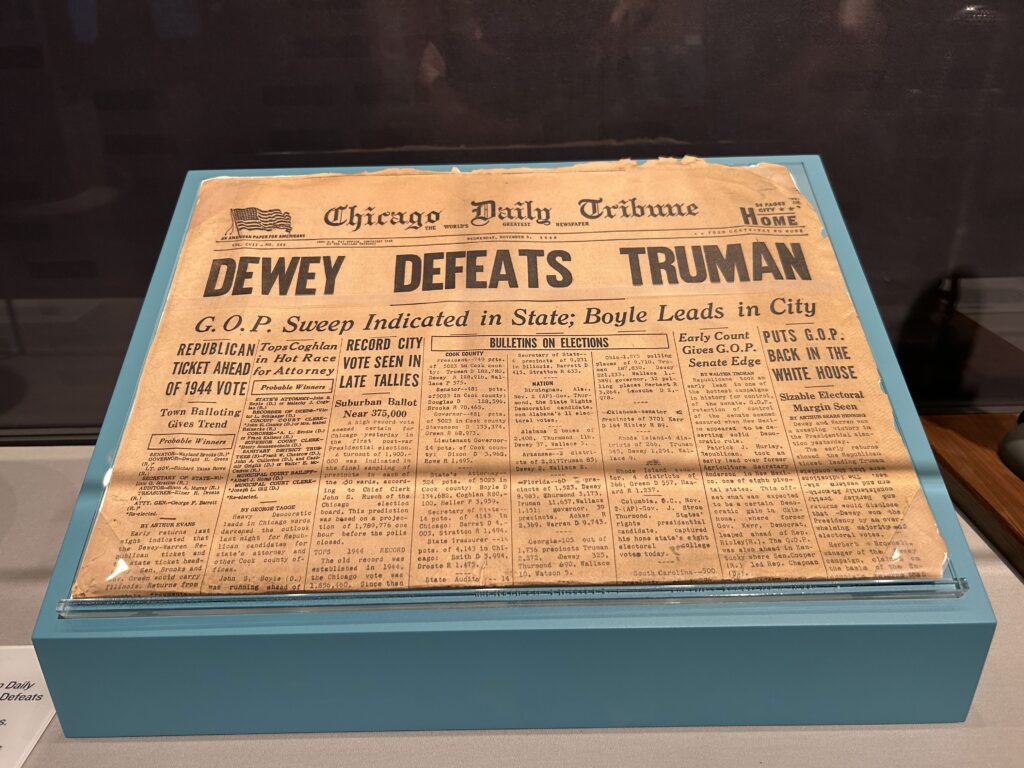
Truman decided to run for president in his own right. Having ascended to the office without being elected, he wanted to earn the position. His blunt, no-nonsense style and the struggling post-war economy made his chances seem slim. On election night, most expected Dewey to win. The Chicago Tribune even printed its infamous headline before the results were finalized. The 1948 presidential election upset with Truman prevailing, securing a full four-year term is explored in depth at the library.
A Legacy Preserved
After leaving the White House, Truman returned to Independence and played an active role in planning, designing, and curating the Truman Library. His personal office remains preserved as it was on his final day of work—a time capsule you can view during your visit. The Truman Library Oval Office replica is a nice feature, showing you the office as it appeared during Truman’s presidency.
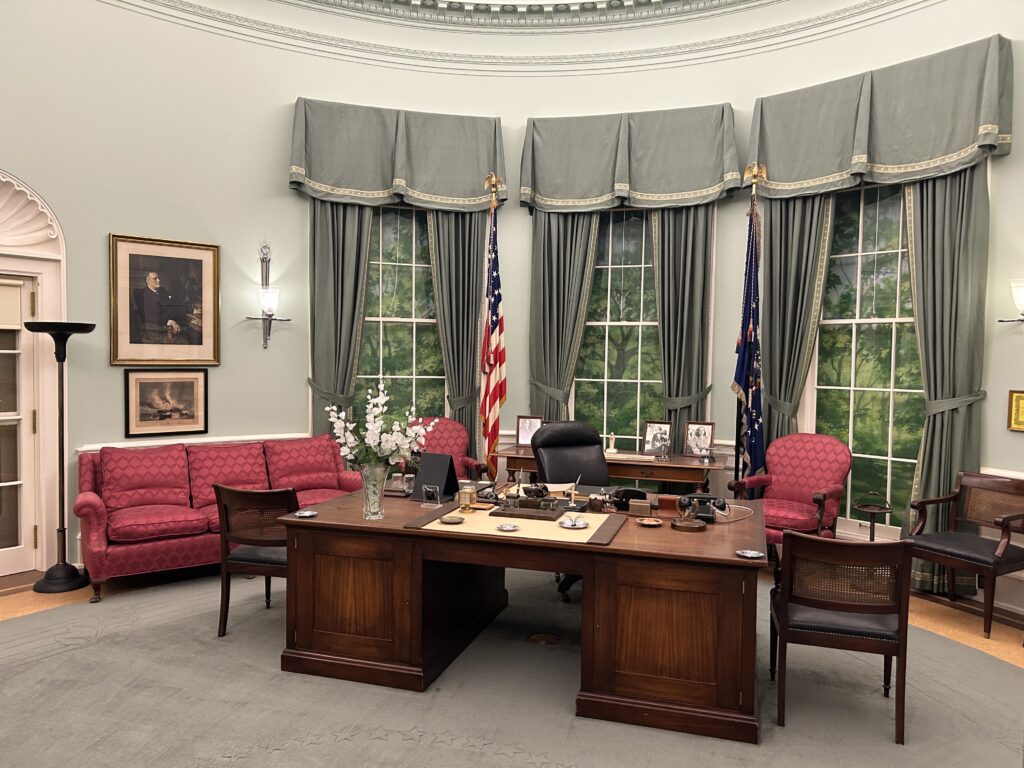
Visiting the Truman Presidential Library
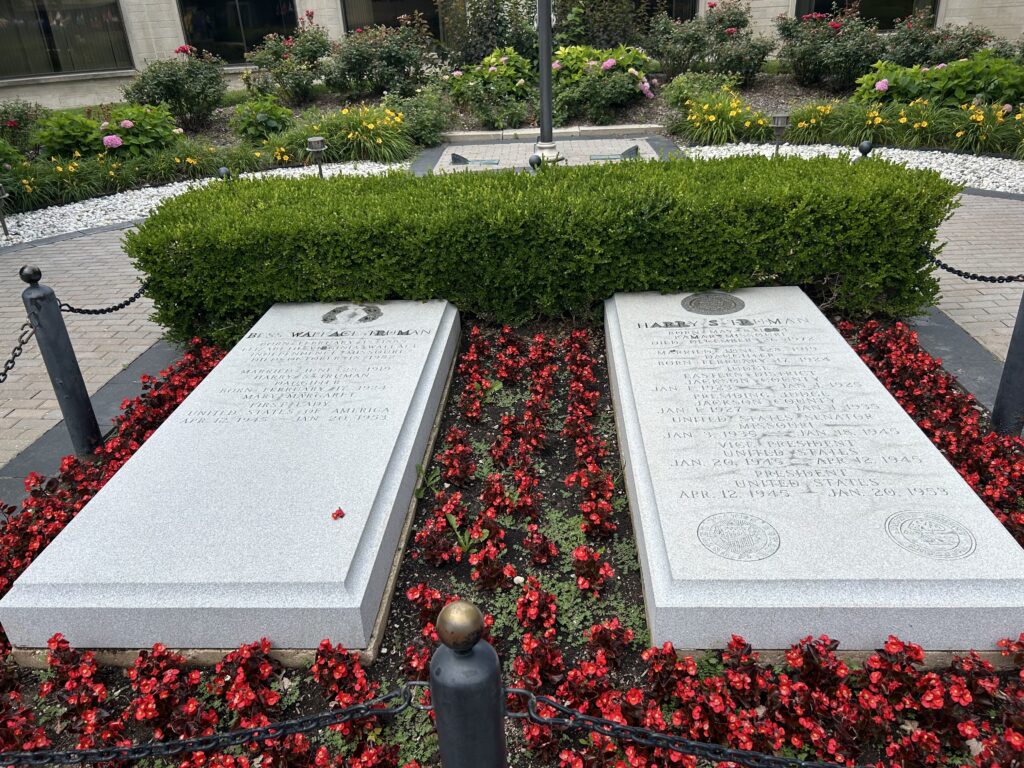
The library also features a very nice courtyard. There are several monuments you can visit on your way to Truman’s office including the Flame of Freedom dedicated by the American Legion. Also in this courtyard are the graves of President Truman and his wife Bess. They first met when Harry was in the fourth grade and remain side by side.
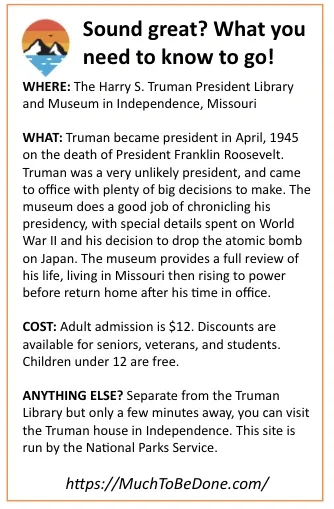
The Harry S. Truman Museum tour is located at 500 W. U.S. Highway 24 in Independence, Missouri. They have ample free parking, and some very inviting grounds to walk around if you choose. The museum is open Monday through Saturday 9AM to 5PM. On Sundays, they are open 12PM to 5PM April through December. Admission is only $12 for adults, with discounts for veterans, seniors, students, and children. Under 12 is free. We managed to save a couple of dollars because we have purchased a Presidential Library pass, good for discounts at many of the participating presidential libraries around the country. Like any museum, there is a gift shop called The Buck Stops Here Store after a famous quote from Truman. There you can pick up a moment should you choose.
A few blocks away, the National Parks Service operates the Truman House. Sometimes referred to as the People’s President, Truman had a very nice yet not over the top residence in Independence. Tours are available to see inside, though it was not open the day we visited.
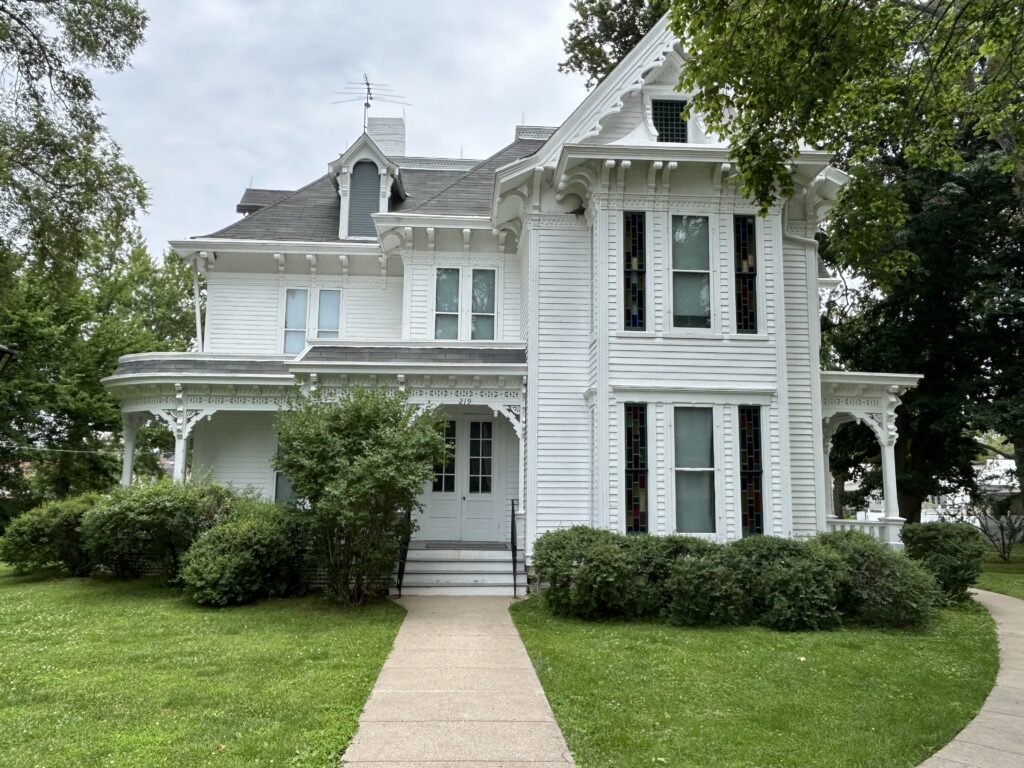
There are several historic sites near Kansas City for you to visit to the area. If you’re a history buff, especially World War II intrigues you, then you want to check this place out. The list of things to do in Independence Missouri may not be long, but for certain the Truman Library and home are near the top.
We’re big fans of Presidential libraries and other historical stops. Check out some of our favorite destinations to learn more.