Belfast Black Cab Tour: Explore the Troubles and Peace Wall
Sometimes a travel destination is memorable because of stunning scenery, historic sites, the people, or even the food. For us, Belfast, Northern Ireland is memorable because of the reality we witnessed during our Belfast Black Cab Tour.
The history of Ireland and Northern Ireland is fascinating and very complicated, to say the least. It’s a complex mixture of politics and religion that has divided the island for generations—and it remains that way today.
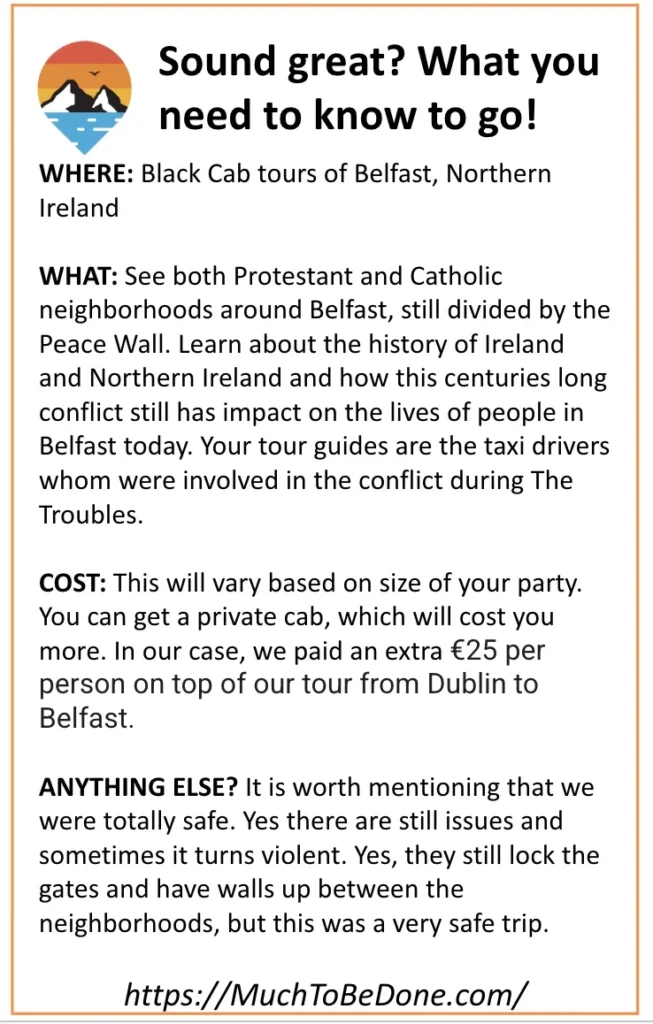
Belfast is an easy day trip from Dublin, and we highly recommend it if you’re visiting the city. In our case, we booked a tour that departed from downtown Dublin and headed north to Belfast, about a two-hour journey. If you’re not interested in an organized tour, there are public transportation options, including bus and train service between the two capital cities.
Yes, both are capital cities—for their own countries. The divide is so deep that the two are separate nations. And that’s really the heart of the story behind the tour we took.
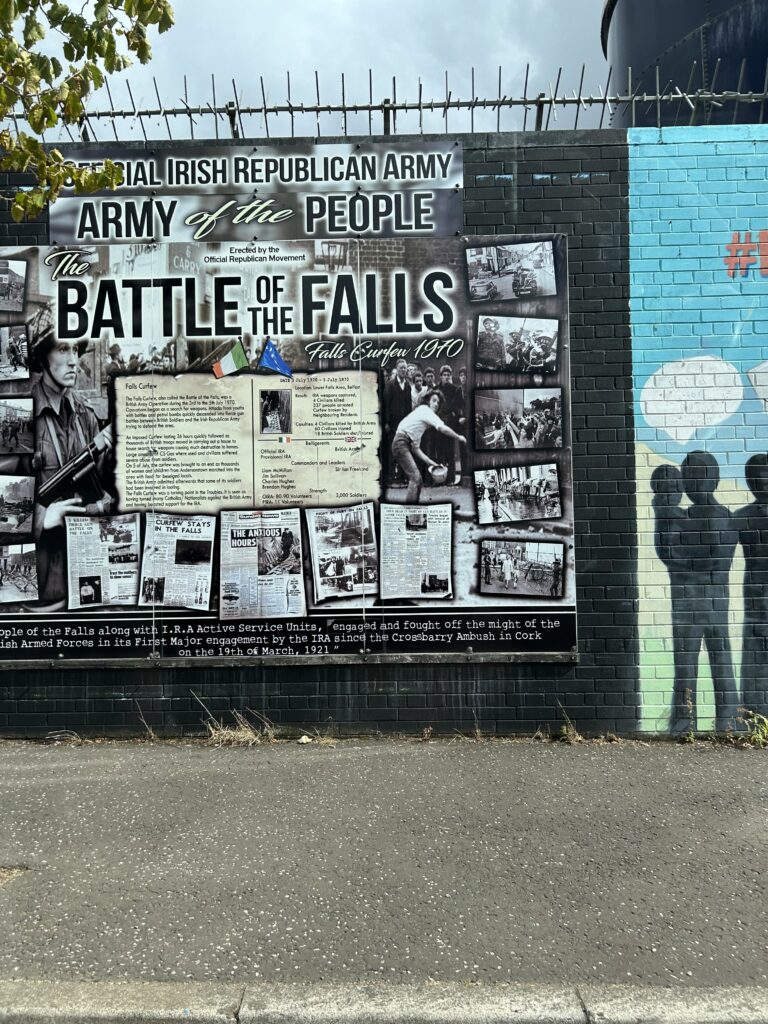
The Troubles Northern Ireland
To prepare for a trip to Belfast, it’s best to start with a quick history lesson. Ireland was part of the United Kingdom from 1801 until 1922. That year, the southern part of Ireland withdrew from the UK and became the Irish Free State, later leaving the British Commonwealth in 1949. The division is almost exclusively along religious lines.
From the late 1960s until 1998, the period known as The Troubles unfolded —an open conflict between Loyalists (loyal to the British Crown and typically Protestant) and Nationalists (seeking independence from the UK and typically Catholic). This era is remembered for riots and violence between the two factions, Loyalists vs Nationalists.
The Good Friday Agreement
With help from U.S. President Bill Clinton, the Good Friday Agreement (also known as the Belfast Agreement) was signed in 1998. It essentially ended The Troubles, though violent flare-ups still occur. The scars of the conflict remain—both emotionally and physically—which is where our tour began.
In Belfast, we highly recommend you take a Black Cab Tour to truly understand the city’s past and present. Your cab driver will share firsthand accounts of the history, the conflict, and the reality of life in Northern Ireland today.
Black Cab Tours were started as a joint venture between Loyalist and Nationalist, Protestants and Catholics. Before 1998, they were at odds; today, they are business partners.
The cab drivers served as our guides, ushering us around this divided city and sharing history through personal stories.
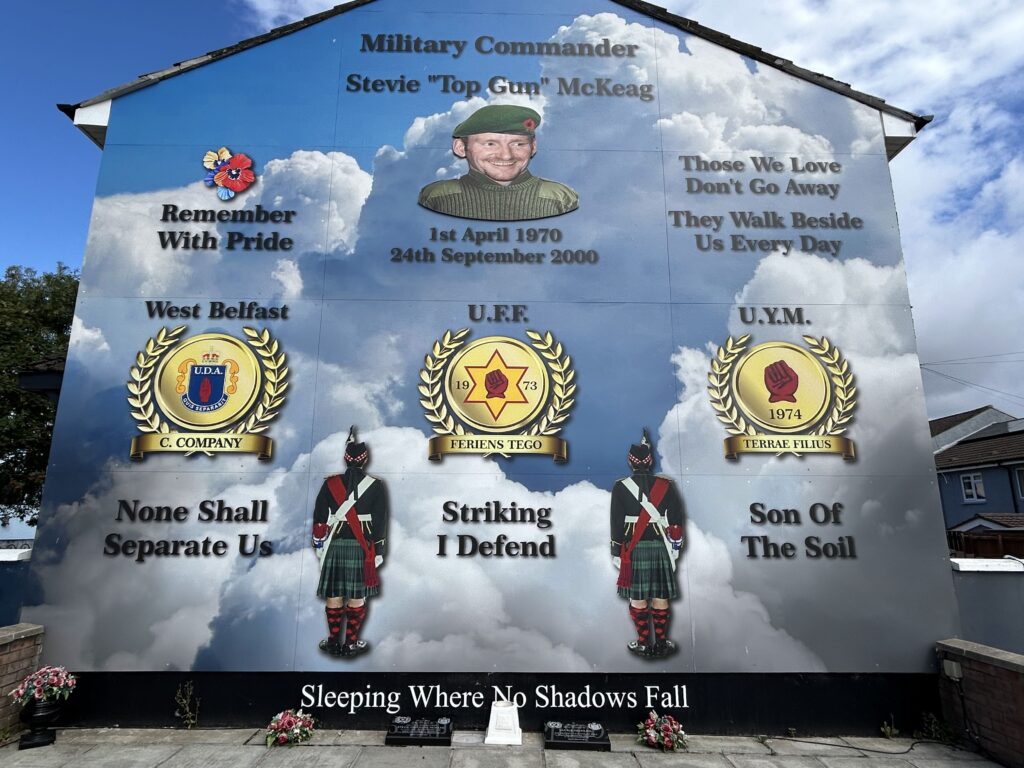
Still a Divided City
You might think that nearly three decades after the agreement, the conflict and division would be a thing of the past. That’s not the case. The city remains divided by the Peace Wall, which was erected in 1969.
History books celebrate the fall of the Berlin Wall in Germany, yet the Belfast Peace Wall still stands. In fact, sections have been added since the Good Friday Agreement. Our guide pointed to a chain-link fence atop the original wall and noted it had been added in the past 20 years.
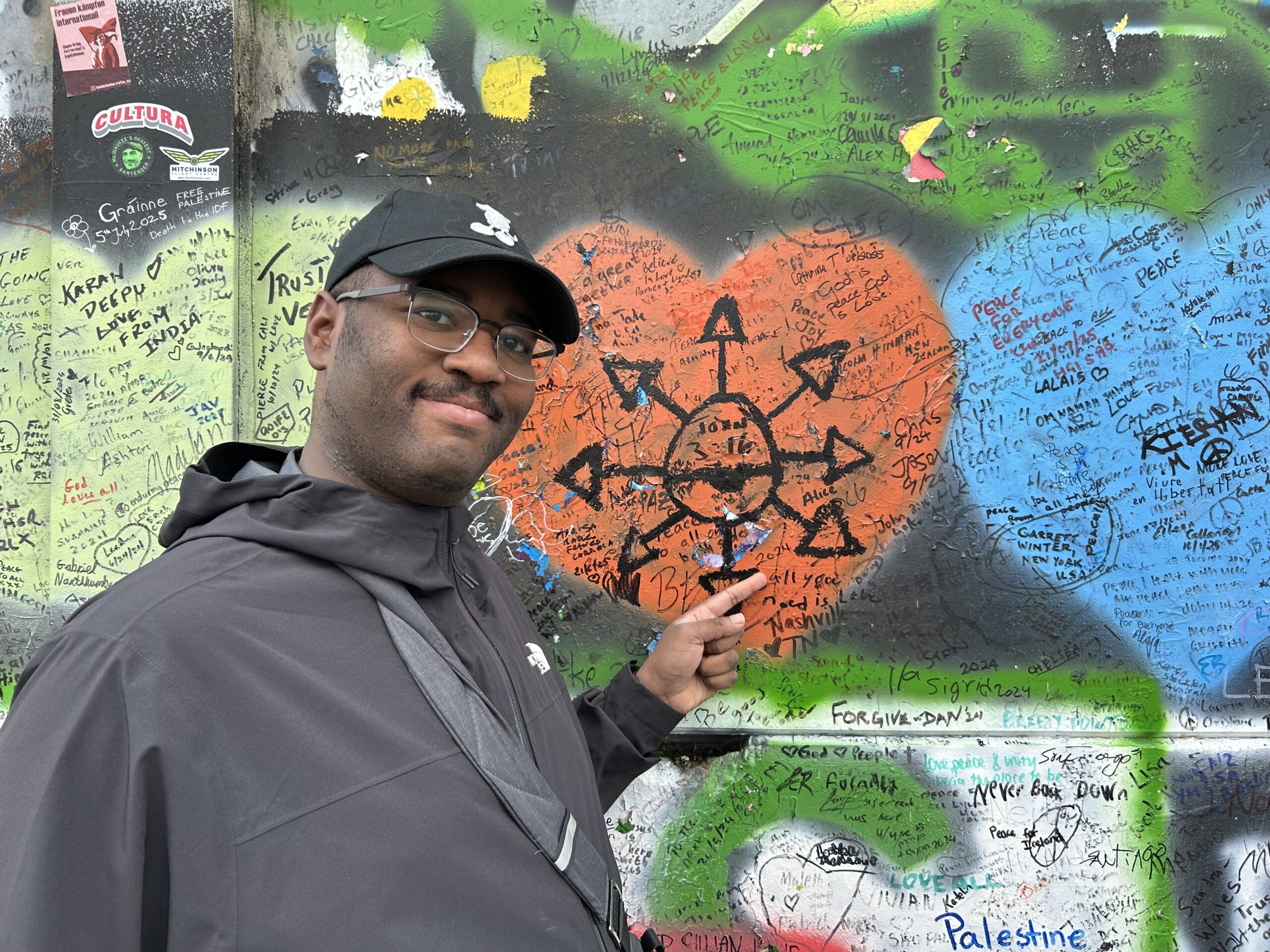
The wall snakes through the city, creating physical barriers between Protestant and Catholic neighborhoods. While the violence has largely stopped, the wall remains—a stark reminder of the differences between neighbors and a memorial to the thousands affected by the conflict throughout history.
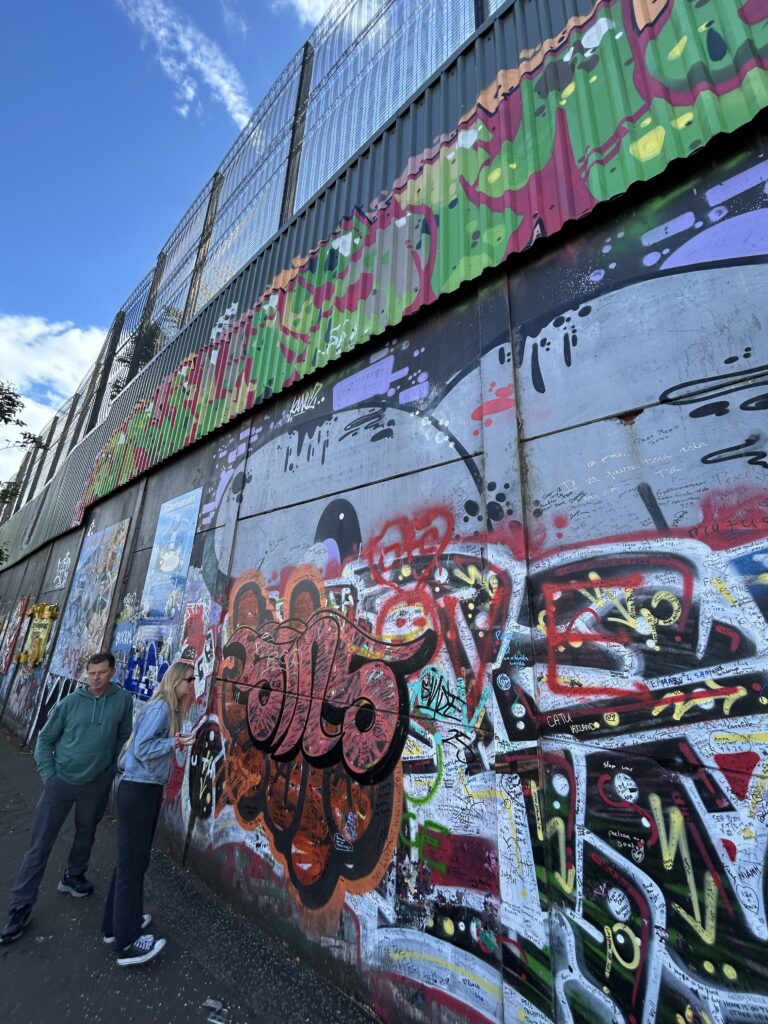
This might surprise you—it certainly surprised us: the gates along many parts of the Peace Wall are still locked nightly. You can move between neighborhoods, but you may have to go out of your way because of the locked gates.
Firsthand Accounts of History
Our tour group included about four Black Cabs. We stopped at several locations, and one of the drivers would speak to the entire group. Though it was never stated outright, it was clear to us that Protestant drivers narrated stops in Protestant neighborhoods, and Catholic drivers did the same in Catholic areas.
Our driver emphasized that their goal was to share their experiences—not to tell us who was right or wrong. Unlike typical tour guides who study scripts, these men were simply recounting stories from their youth.
One driver shared gripping stories of throwing homemade bombs and Molotov cocktails, pointing to scars on his forearm. He also told us about being hit by a rubber bullet in his leg. These personal accounts brought history to life in a way no textbook ever could.
Beauty Arises from Conflict
Belfast is a city in transition. The region struggled economically during The Troubles and is still working to recover. Tourism—and the Black Cab Tours specifically—are part of that recovery. As new generations grow up, perhaps the conflict and division will fade.
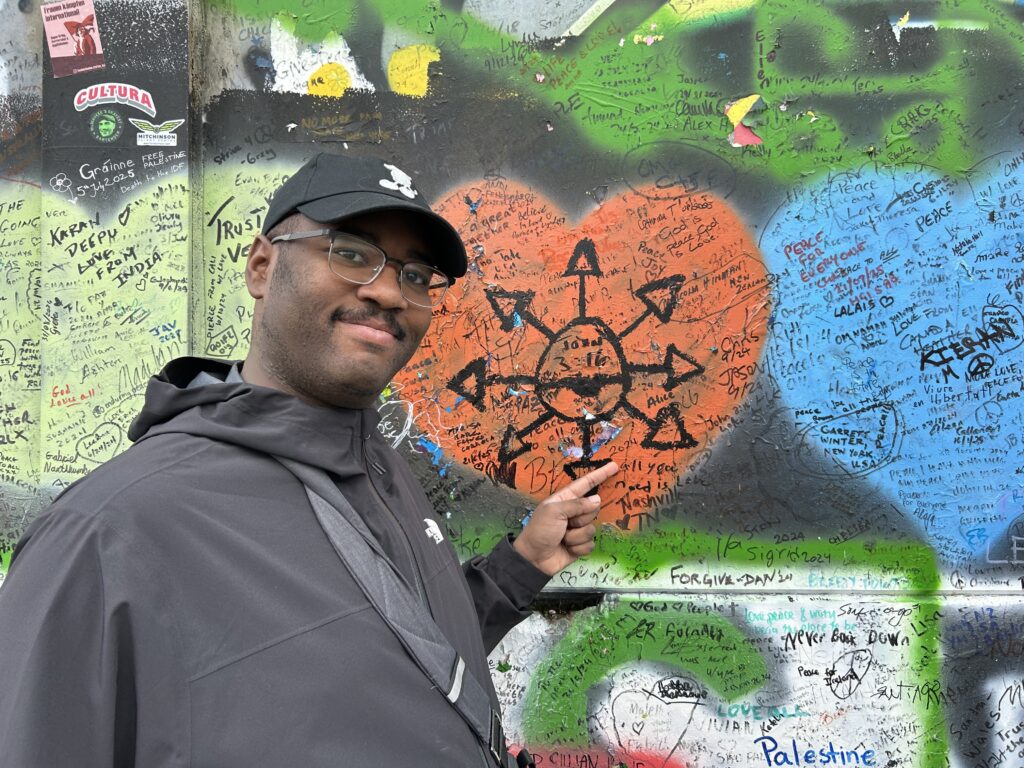
In the meantime, the Peace Wall remains. Belfast murals and graffiti are plentiful, and cover walls and prominent buildings throughout the city. As odd as it may sound, there’s a certain beauty in the artwork and especially in the messages of hope that they bring.
As part of our tour, we were given a marker and encouraged to add our own message of peace to the wall. This was a touching moment—reading heartfelt messages from others and then adding our own messages.
Planning Your Belfast Black Cab Tour
A Belfast political tour, and specifically a Black Cab Tour should be at the top of your list when visiting Belfast. Several Black Cab companies offer political tours of the city. In our case, the taxi tour was part of our day trip from Dublin. We met the cab drivers downtown, and they dropped us off at the same spot. The total tour time was about two hours.
There are plenty of other reasons to visit Belfast. The Giant’s Causeway tour is a stunning natural site north of the city. If you’re a fan of Titanic history, consider visiting the Titanic Museum Belfast like we did. The museum is located at the former Harland & Wolff shipyard where the ship was built. Just south of Belfast and across the boarder into Ireland is is the historic ruin of an early Christian monastic settlement call Monasterboice which is a unique day trip to consider as well. If you’re exploring Europe, before to check out our travel tips for first time European travelers.