Walking the Boston Freedom Trail: A Quick Tour or a Full-Day Deep Dive
The United States may have declared its independence in Philadelphia, but Boston was the heart and soul of the liberty that forged a new country. Today, you can still feel that history when walking the Boston Freedom Trail throughout downtown.
We are fans of history and have walked the Freedom Trail a few times, and the Freedom Trail delivers every time. The trail is a rare bargain among tourist attractions. You can walk it and experience most of the sites up close for no charge, though that won’t get you inside the famous churches and a few other spots along the route. The Freedom Trail is also flexible, depending on your approach and available time. We have walked it a few times, taking both the quick-view approach and the immersive full-day version.
What Is the Boston Freedom Trail?
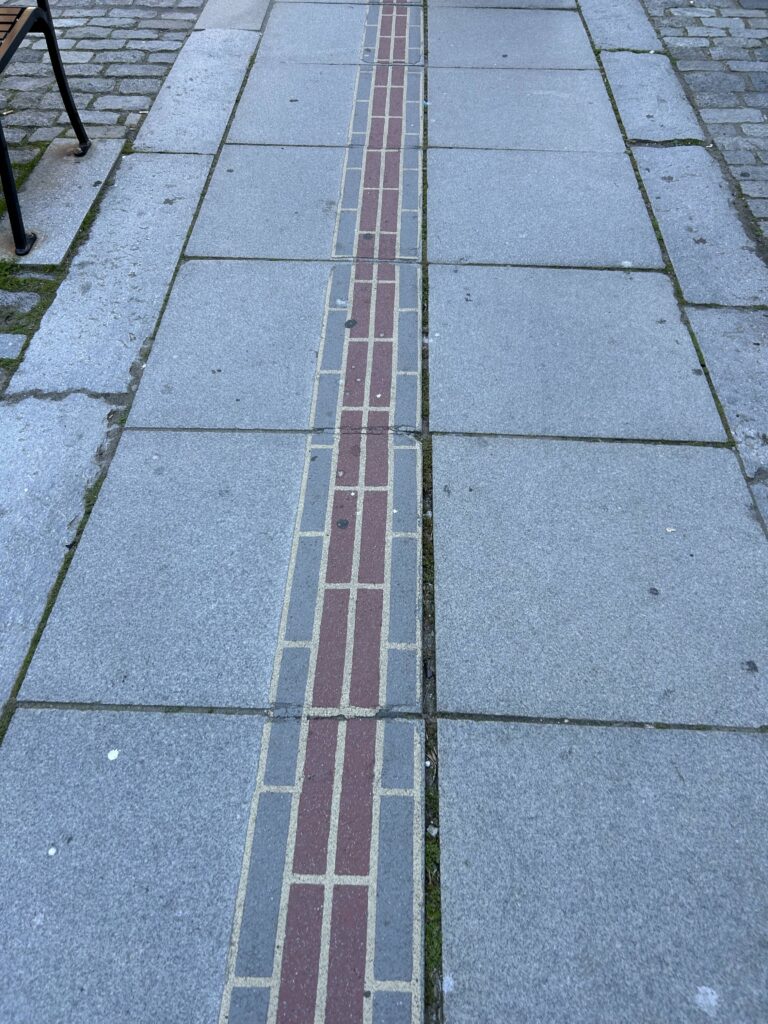
The Freedom Trail runs through the heart of Boston and is the perfect route to take to tell you the story of the American Revolution in New England. The route is easy to follow by simply following the red bricks (or red lines in some instances) and bronze medallions embedded in the ground at 16 historic spots scattered along a two and a half mile trail.
Starting at the Boston Common Visitors Center, you can follow the bricks to learn about the events that led to the birth of the United States. Purchase walking tour tickets if you wish, or pick up your own Freedom Trail Boston map for $3 and venture out on the trail on your own.
Two Ways to Walk the Freedom Trail
How you approach the Freedom Trail depends on your appetite for history: an all-day deep dive or a quick overview. We have done both and loved both. On our first trip, we went deep and spent an entire day walking the Boston Freedom Trail. If your Boston schedule allows that luxury, we definitely recommend it. If a full day does not fit your timeline in Beantown, have already done the deep dive, or you are traveling with small kids who would struggle with a full day of pre-Revolutionary War history, then consider the quicker overview approach.
The Quick Overview: Three to Four Hours
On our last visit walking the Boston Freedom Trail, we chose a roughly three-hour guided walking tour. As is our custom, we found a small group tour with about a dozen guests. There are many tours to choose from: private tours, small groups like ours, or large groups. Seeing the very large groups crowd around monuments and cemeteries trying to hear their guide made us thankful for the smaller, more intimate experience.
Along with group size, a guided tour also lets you choose whether you want a guide dressed in period costume. We chose no costumes, but if you have little kids, seeing the period clothing and getting a good photo op with a costumed guide might be worth it.
Walking the Boston Freedom Trail with no guide is very doable. If a Freedom Trail self guided approach is what you prefer, follow along with the official Freedom Trail app. It is free to download and features a fully offline 94-minute GPS audio tour that walks you through downtown and all 16 Freedom Trail landmarks.
Walking the Boston Freedom Trail in a few hours means you won’t have the luxury of lingering in the cemeteries, where many of the names you learned about in history class are buried. The same is true of the churches along the route. You will hear the stories and understand their importance, but you won’t have the time to step inside these historic buildings.
The Full-Day Deep Dive
You can absolutely make a day of walking the Boston Freedom Trail. Having the full day allows you a chance to take in the sights and sounds of the city along with all the history. Arrive just after the morning rush hour and start your tour. Plan a lunch break into your day at one of the amazing North End Italian restaurants or one of the many food stalls inside Faneuil Hall. The Boston food scene, as you might expect, is legendary.
If you don’t want to go it alone, there are also full-day tours you can take. Like the quick overview tours, you’ll have choices to make on the size of tour you want to join. Smaller is always better, but you pay for that more intimate setting.
On our full-day approach, we arrived early and started our tour. Winding our way through history, we took a break for lunch, then finished up the walking portion of the Freedom Trail and took to the water. Boston is well known for its duck boat tours.
A Boston Duck Tour is a natural complement to walking the Boston Freedom Trail. The 2.5-mile trail rewards you with hours of history at a walking pace, while a Boston Duck Tour delivers a broader overview of the city before splashing into the Charles River. The combination works because it saves your feet while expanding your sightseeing radius.
The 16 Official Freedom Trail Stops
The Freedom Trail runs 2.5 miles from Boston Common through downtown, the North End, and across the Charles River to Charlestown. Most of the 16 sites are free to visit, though a few charge admission if you want to step inside. The stops below are listed in the order you will encounter them if you start at Boston Common and follow the red bricks north to the Bunker Hill Monument.
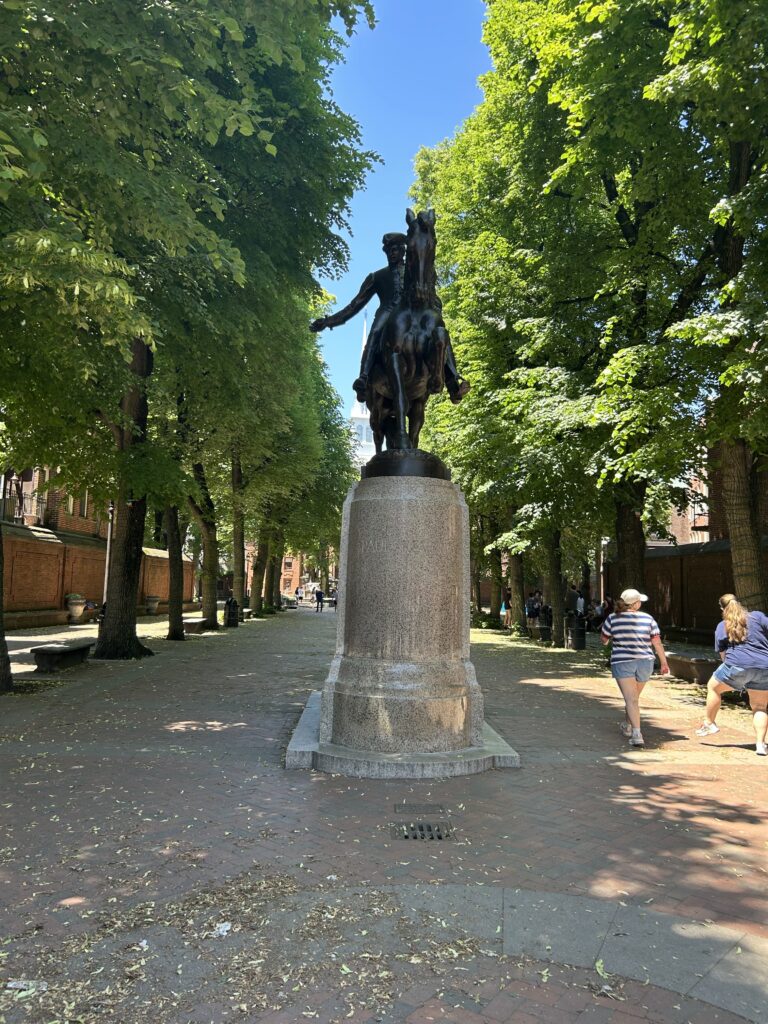
- Boston Common. Established in 1634, Boston Common is the oldest public park in America and the official starting point of the trail. Grab a map at the Visitor Information Center at 139 Tremont Street before you head out.
- Massachusetts State House. The gold-domed seat of Massachusetts government has stood atop Beacon Hill since 1798. Free tours are offered on weekdays.
- Park Street Church. Built in 1809, this landmark church was a center of the abolitionist movement and hosted the first public performance of “My Country, ‘Tis of Thee” in 1831.
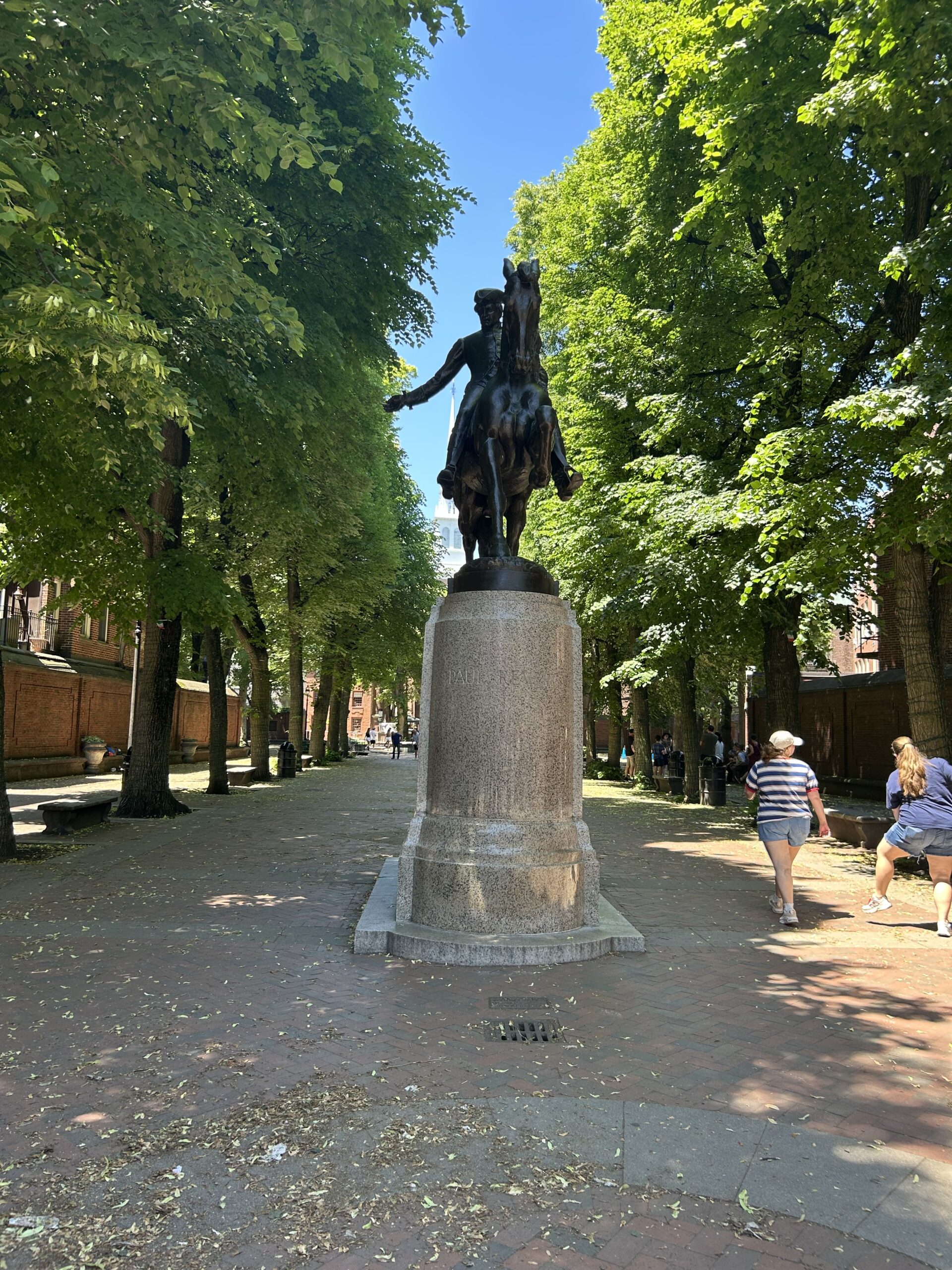
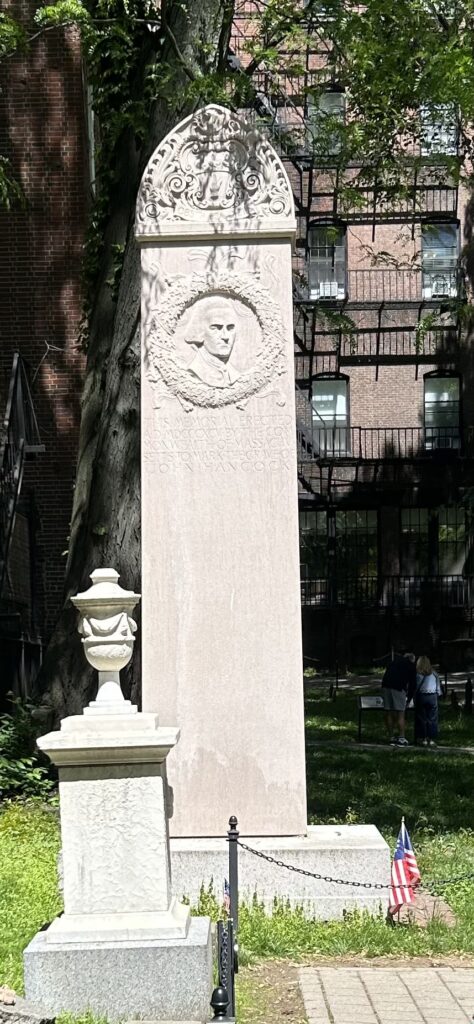
- Granary Burying Ground. The final resting place of Paul Revere, Samuel Adams, John Hancock, Robert Treat Paine, James Otis, and the five victims of the Boston Massacre. Free to enter and a highlight of the trail.
- King’s Chapel and King’s Chapel Burying Ground. Boston’s first Anglican church, built in 1754, sits beside the city’s oldest burying ground, dating to 1630.
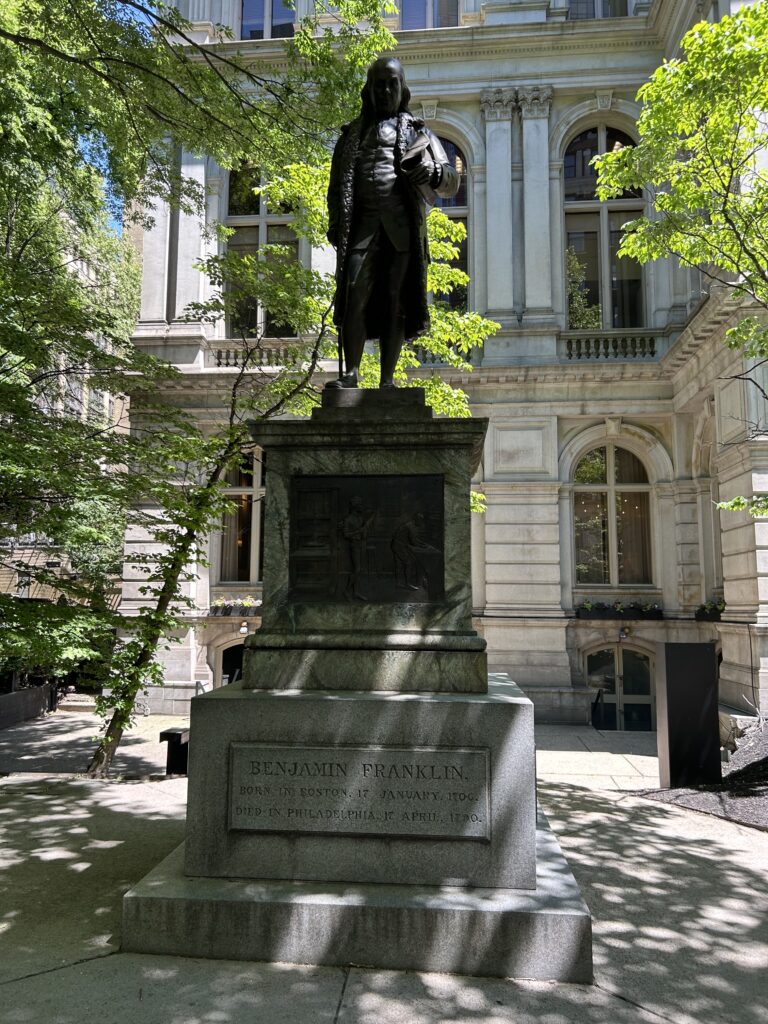
- Boston Latin School Site and Benjamin Franklin Statue. A sidewalk mosaic marks the site of the first public school in America, founded in 1635. A statue of alumnus Benjamin Franklin stands nearby.
- Old Corner Bookstore. Built in 1718, this is downtown Boston’s oldest commercial building and once housed the publisher of Thoreau, Hawthorne, and Longfellow. Today it is a Chipotle, which tells you something about historic preservation in a modern city.
- Old South Meeting House. The gathering place where colonists organized the Boston Tea Party on December 16, 1773. Admission charged.
- Old State House. The oldest surviving public building in Boston, built in 1713, and the site from which the Declaration of Independence was first read to Bostonians in 1776. Admission charged.
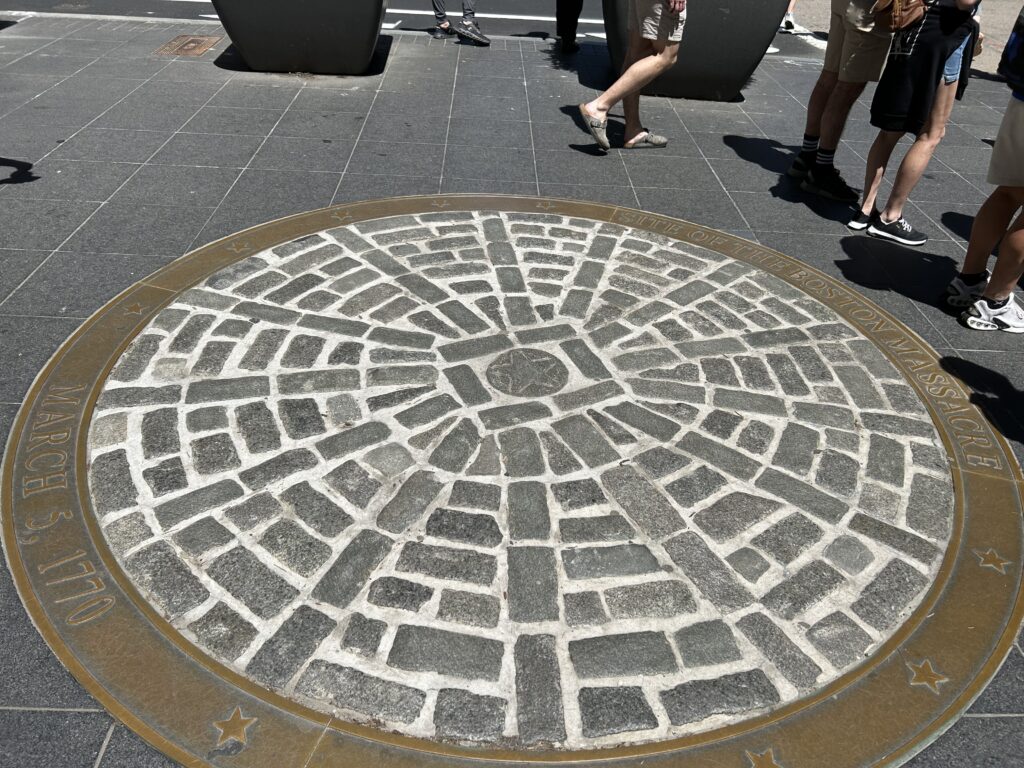
- Boston Massacre Site. A circle of cobblestones outside the Old State House marks the spot where British soldiers killed five colonists on March 5, 1770.
- Faneuil Hall. Known as the “Cradle of Liberty,” this hall hosted the town meetings that fueled the American Revolution. The Great Hall on the second floor is free to visit when open.
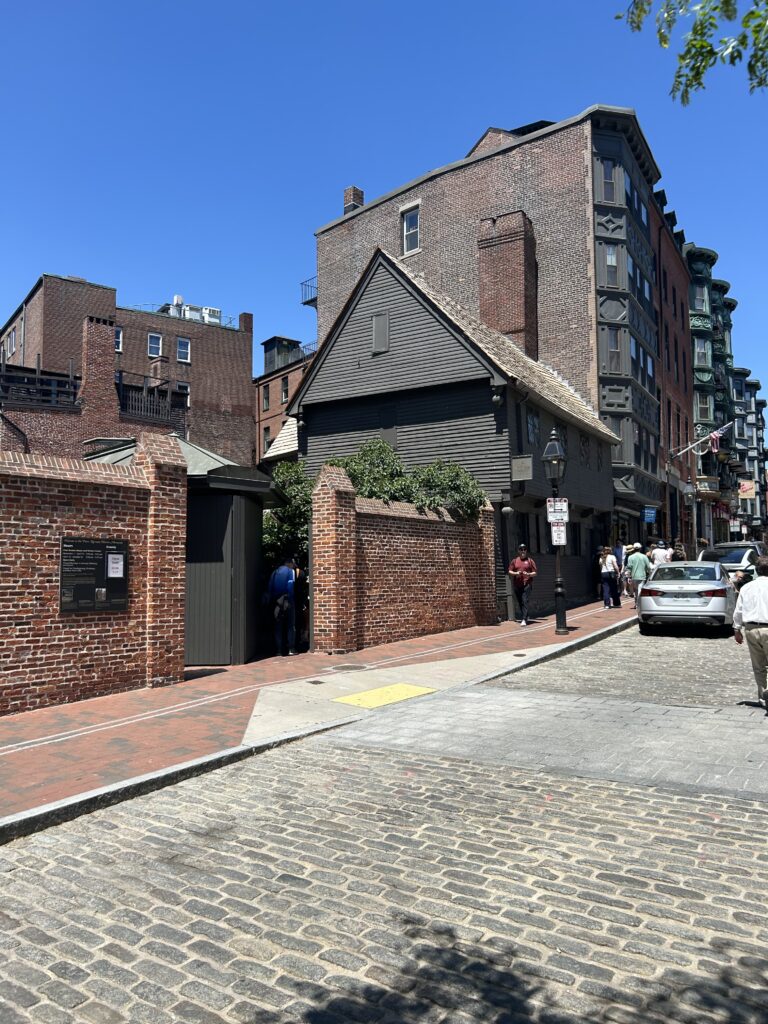
- Paul Revere House. Built around 1680, this is the oldest remaining structure in downtown Boston and the only Freedom Trail site that is a private home. Admission charged.
- Old North Church. Boston’s oldest church, built in 1723, where the two lanterns were hung on the night of April 18, 1775, to signal Paul Revere’s ride.
- Copp’s Hill Burying Ground. The second-oldest cemetery in Boston and the resting place of the Mather family, Robert Newman, Prince Hall, and Edmund Hartt, builder of the USS Constitution.
- USS Constitution. Launched in 1797 and nicknamed “Old Ironsides,” she is the oldest commissioned warship still afloat in the world. Free to board, but adults will need a valid photo ID.
- Bunker Hill Monument. A 221-foot granite obelisk marking the site of the June 17, 1775, Battle of Bunker Hill. If you have the legs left after walking the trail, you can climb 294 steps to the top.
Why the Burying Grounds Are Worth Your Time
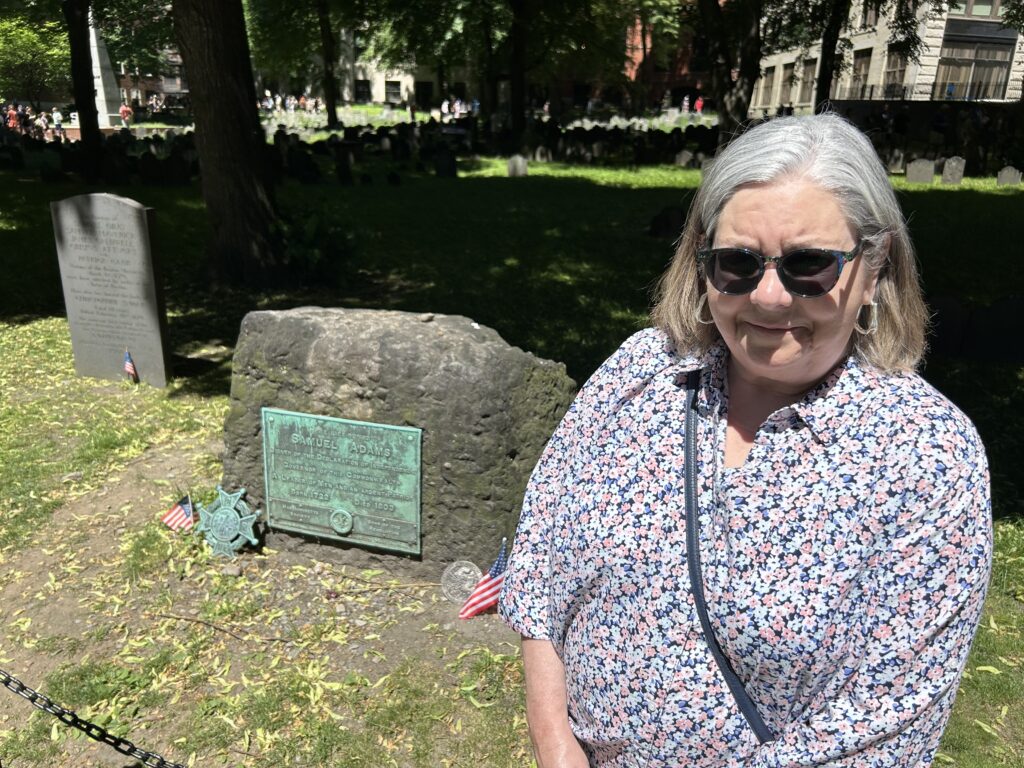
Two of the three burying grounds on the Freedom Trail are worth slowing down for, especially if you love cemeteries as much as we do. At Granary Burying Ground, you can pay your respects at the graves of three signers of the Declaration of Independence: Samuel Adams, John Hancock, and Robert Treat Paine. These men were core members of the Sons of Liberty, the underground network that turned colonial frustration into organized resistance. Paul Revere is buried here too, along with James Otis, the five victims of the Boston Massacre including Crispus Attucks, and an obelisk honoring the parents of Benjamin Franklin.
Sam Adams is a distant relative of ours, which made standing at his grave a small family moment for us. A short walk into the North End brings you to Copp’s Hill Burying Ground, the second-oldest cemetery in Boston.
This is the resting place of Robert Newman, the Old North Church sexton who hung the signal lanterns on the night of Paul Revere’s ride. The Mather family tomb holds Increase, Cotton, and Samuel Mather, three Puritan ministers whose names are tied to the Salem witch trials. Prince Hall, the founder of Black Freemasonry, and Edmund Hartt, the builder of the USS Constitution, are buried here as well. Look for the headstone of patriot Daniel Malcolm, which still bears the musket ball scars from British soldiers who used it for target practice during their occupation of Boston.
Practical Tips for Walking the Boston Freedom Trail
If you are driving into the city, plan your start and stop times around Boston’s notorious rush hour, and book a downtown parking spot ahead through a service like SpotHero or ParkWhiz. If you are staying in Boston, the T is faster and cheaper than driving. The Park Street and Boylston stations both drop you within a block of Boston Common.
Wear comfortable shoes because you will cover the full 2.5 miles one way, and by the time you factor in side trips into museums and the walk back to your car, you can easily log 5 to 6 miles. The red-brick path is charming, but centuries of foot traffic and Boston winters have left plenty of uneven spots. We noticed it and mentioned it more than once, so keep an eye on where you are walking, especially in the older sections near the burying grounds.
Check site hours before you go, since a few of the historic buildings close earlier than you might expect and some are closed on Mondays. The Freedom Trail Foundation posts current hours for every stop. Bring a card or cash for admission at the Old State House, Old South Meeting House, and Paul Revere House, and be sure to carry a photo ID if you plan to board the USS Constitution, since she sits on an active Navy base in Charlestown.
Take a break as you’re walking the Boston Freedom Trail at Quincy Market roughly halfway through the trail for a coffee, a snack, and a restroom stop, because public restrooms along the rest of the route are scarce. And save some legs for the end. The final stretch across the Charles River to Charlestown includes a real hill, and the Bunker Hill Monument itself has 294 steps to the top if you want the view.
When to Visit the Freedom Trail
Boston is a popular vacation destination. Peak times throughout the summer and during school breaks will be crowded. As you are walking the Boston Freedom Trail, you will be spread out over many locations. You’ll see the crowds but still have plenty of space for your group.
Our last time walking the Boston Freedom Trail was on a Wednesday morning in early June. There were a large number of tour groups throughout, and we saw a couple of school tours as well. Weather wasn’t too much of a factor for us with pleasant low 70s temps and no precipitation. But you’ll want to check the weather, because as you are walking the Boston Freedom Trail you will be exposed to whatever Mother Nature has in store.
If you’re planning a New England vacation, check out some of our other Beantown adventures, including a tour of Fenway Park and a day trip to Salem.